
4 min read

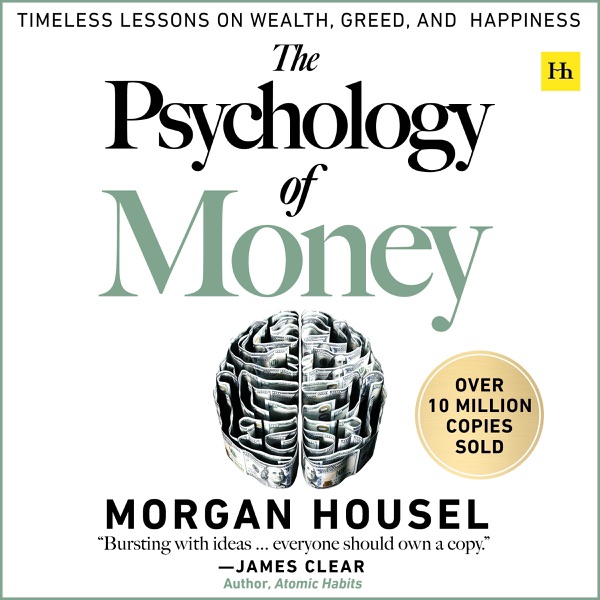
Morgan Housel argues that doing well with money has less to do with what you know and more to do with how you behave. Across a series of short, story-driven chapters, he makes the case that financial success is a “soft skill” shaped by patience, humility, and emotion. It’s a personal-finance book that feels more like a conversation about human nature than a spreadsheet.
Get the The Psychology of Money Audiobook on AmazonListen on Audible · also in Kindle & printWhat The Psychology of Money is about
“The Psychology of Money” is a collection of short, self-contained chapters built around a single idea: the way we think and feel about money usually matters more than technical financial knowledge. Morgan Housel explores how factors like ego, fear, greed, luck, and the experiences we grow up with quietly drive the decisions we make about saving, spending, and investing.
Rather than offering a rigid step-by-step system, the book focuses on timeless behaviors and mindsets, things like the value of patience, the power of compounding over time, the difference between being rich and being wealthy, and why “enough” is an underrated goal. Each chapter stands on its own while reinforcing a larger theme, making the book approachable for newcomers to personal finance and still thought-provoking for experienced investors looking to sharpen how they think.
| Author | Morgan Housel |
|---|
Why The Psychology of Money is great on audio
The book’s structure, short, story-driven chapters that each make one clear point, lends itself well to listening, since you can absorb an idea on a commute or walk without losing the thread. The conversational, jargon-light tone keeps it easy to follow by ear, even if you’re new to money topics. The Psychology of Money audiobook suits anyone who prefers learning through stories and ideas rather than charts and formulas.
Who should listen
Listen if you want a thoughtful, behavior-focused take on money that prizes mindset over tactics, and if you enjoy reflective, anecdote-rich nonfiction. It’s a strong fit for beginners and for seasoned investors curious about the emotional side of decision-making. You might skip it if you’re after concrete, prescriptive steps, specific investment picks, or a detailed how-to system, since this book deliberately stays at the level of principles and behavior.
If you like The Psychology of Money, listen to these next
- Atomic Habits by James Clear
- Rich Dad Poor Dad by Robert Kiyosaki
- Think and Grow Rich by Napoleon Hill
How to listen to The Psychology of Money
The Psychology of Money is available on Audible and Amazon. If you’re new to Audible you can listen with a free trial, or buy the audiobook (also in Kindle and print) on Amazon.
Get the The Psychology of Money Audiobook on AmazonListen on Audible · also in Kindle & printFrequently asked questions
How can I listen to the The Psychology of Money audiobook?
It’s available on Audible and Amazon. New Audible members can start with a free trial, and you can also buy the audiobook outright on Amazon.
Is this book good for someone new to personal finance?
Yes. It avoids heavy jargon and focuses on mindset and behavior rather than complex math, so newcomers can follow it easily, while more experienced investors still find the perspective valuable.
Does the book give specific investment advice or stock picks?
No. It’s focused on timeless principles, habits, and the psychology behind money decisions rather than telling you exactly what to buy or offering a step-by-step financial plan.
Are there spoilers I should worry about before listening?
Not really. The book is organized as a series of standalone chapters built around ideas and stories, so there’s no plot to spoil, you can dip in and out and still get value from each one.